

What Every Case Manager Should Know About SSI Asset Limits in 2025
For nonprofits managing restricted grant funds, every dollar disbursed carries a hidden risk: one wrong purchase could push a beneficiary over their SSI asset limit and cost them their benefits. Virtual debit cards with built-in spending controls are the modern solution — but they only work if you understand why traditional cash or reimbursement models fail.
- 1. SSI asset limits are unforgiving
Supplemental Security Income (SSI) has a $2,000 resource limit for individuals. A single deposit that pushes a beneficiary over that threshold — even temporarily — can trigger benefit loss, repayment demands, and months of appeals. Rent, food, and shelter payments received by the beneficiary count as in-kind support and maintenance (ISM), reducing SSI by up to one-third.
- 2. Why cash to beneficiaries is dangerous
When a nonprofit reimburses a beneficiary directly or hands them cash for a purchase, the money passes through the beneficiary's pocket — and through SSA's accounting. It counts as income for SSI. The 'safer' path is direct-to-vendor payment: the nonprofit pays the merchant, the beneficiary never touches the money, and SSI eligibility stays intact.
- 3. How merchant category blocking (MCC) works
Every merchant has a Merchant Category Code (MCC) — a 4-digit classification Visa and Mastercard use. Grocery stores, liquor shops, casinos, and even cash advances each have distinct MCCs. Virtual cards issued through BenefitsSafe can block entire categories. A card issued for software subscriptions only accepts MCCs matching online services — declining at a grocery store automatically.
- 4. Spending limits and curfews add a second layer
Beyond MCC blocking, BenefitsSafe cards enforce dollar caps (per transaction, per day, per month) and time-based curfews (no 2am purchases). If a card is compromised or misused, the spending cap prevents catastrophic loss. Curfews flag unusual patterns before they become problems.
- 5. SentinelLayer watches the thresholds you can't
Cards alone aren't enough. BenefitsSafe's SentinelLayer monitors every beneficiary's financial picture daily — across SSI, SSDI, Medi-Cal, and CalFresh. If a birthday check from family or a tax refund pushes someone near the $2,000 SSI limit, the system alerts their case manager with specific numbers and recommended actions.
- Never disburse cash directly to an SSI beneficiary. Pay vendors. analytics.
- Issue merchant-locked virtual cards per expense category.
- Set spending caps matched to grant budget categories.
- Monitor daily thresholds automatically with SentinelLayer.
- Document every transaction for immutable audit trail.
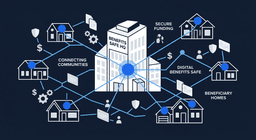
The combination of virtual cards, merchant category blocking, spending limits, and continuous threshold monitoring isn't just convenience — it's a protective architecture. When a nonprofit can prove every dollar went to an approved vendor, stayed inside compliance thresholds, and never passed through a beneficiary's account, benefits eligibility is preserved by design.
Ready to issue your first virtual card? Start your free BenefitsSafe trial today.
 Previous post
 Next post